Positive economic news buoys Iran’s new president ahead of UN visit
Iran’s new president, Masoud Pezeshkian, is in New York this week to attend his first UN General Assembly meeting. His foreign policy team, led by foreign minister Abbas Araghchi, is with him hoping to resurrect the all-but-dead nuclear talks. Pezeshkian’s success in his first term depends on easing, if not ending, US sanctions. In seeking talks with the West, two recent pieces of positive economic news help dispel the notion that Iran is seeking to resume negotiations because its economy is tanking. They will not convince those who wish to interpret Pezeshkian’s election and his reaching out to the West as signs that sanctions are finally doing their wrecking job and it is therefore time to wait as Iran’s position softens. But, for the record, there is some positive news.
Two key economic indicators bolster Iran’s position as it engages with skeptical Western diplomats:
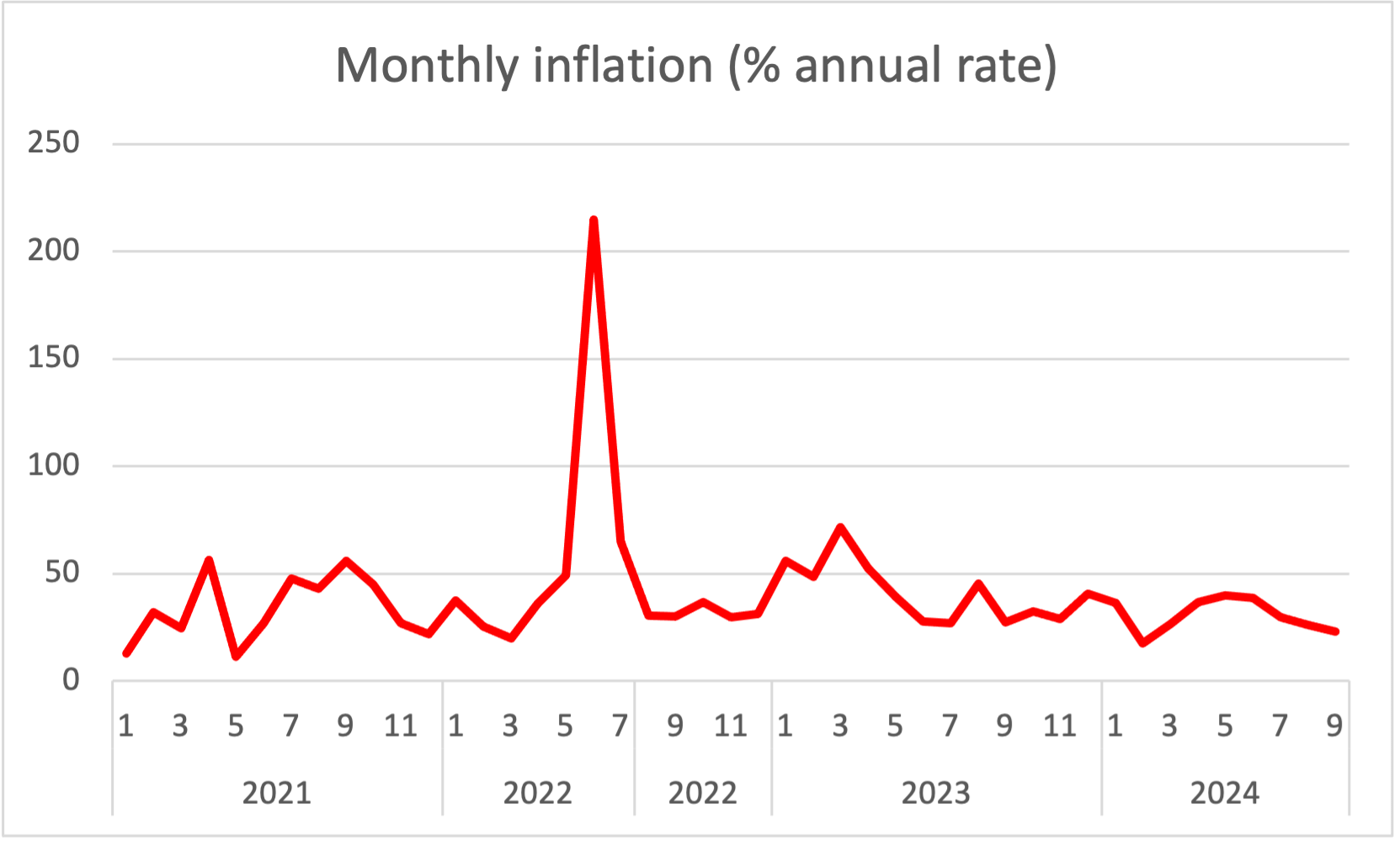
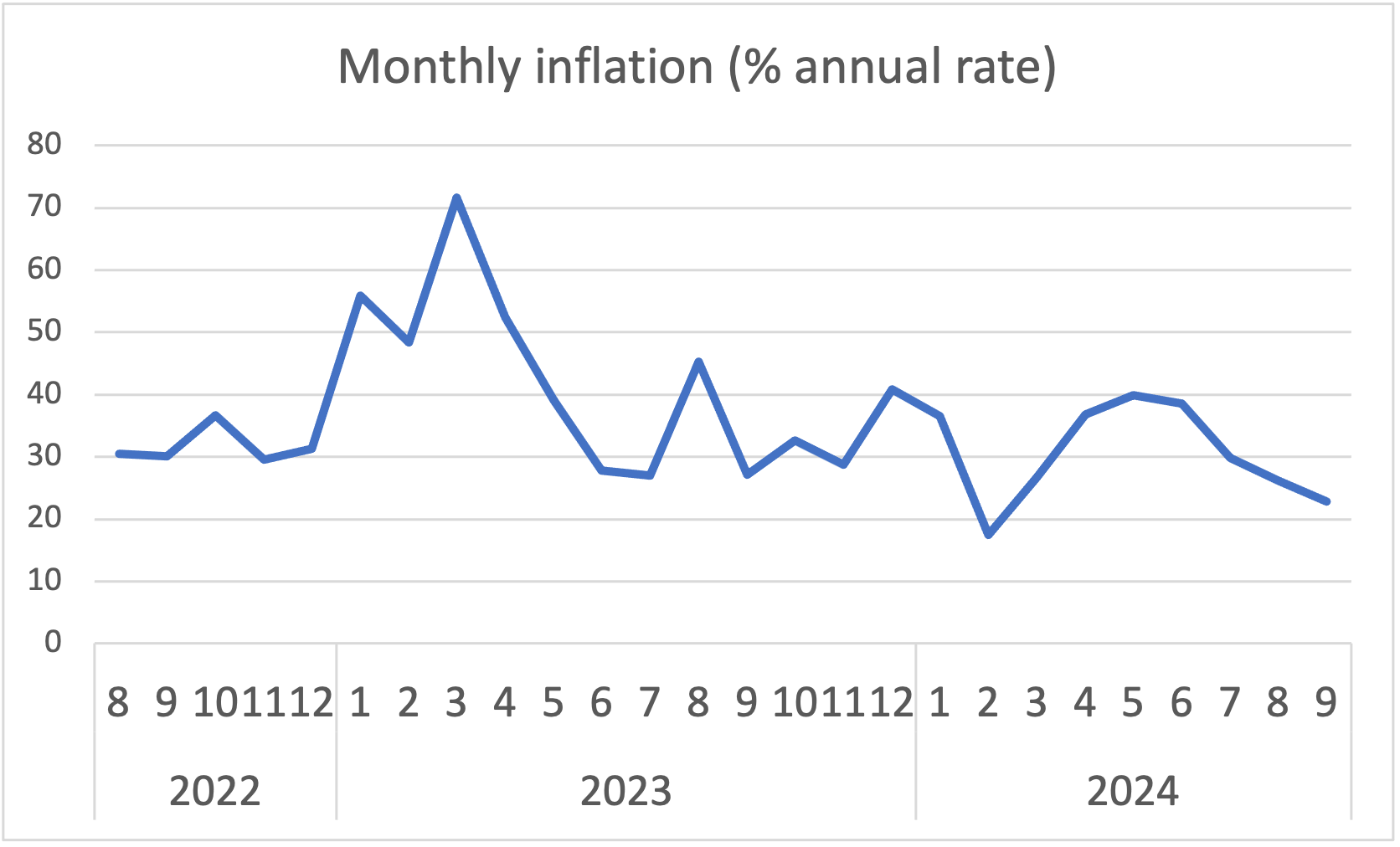
- Inflation: Last month (the Iranian month ending September 20), prices rose at a 22% annual rate, marking the third consecutive month of inflation below 30%.
- Economic growth: Despite sanctions, Iran’s economy grew by 4.5% in the 2023/24 Iranian year and by 3.3% during spring this year.
To appreciate why a 22% inflation can be good news, consider that less than two years ago, in June 2022, prices surged at a record annual rate of 214% (Figure 1, left panel) following the removal of the exchange rate subsidies. As recently as 18 months ago, inflation was still above 50% annually (see the right panel). The crucial question now is what factors are driving this slowdown. Possible explanations include tight monetary policy (which has frozen real estate transactions), rising supply of foreign exchange (oil production was up), and improved budget discipline. Understanding which of these factors played a role will indicate whether the slowdown is likely to continue.
Turning to economic growth, the reasons behind the modest recovery are equally unknown. The Central Bank report containing the new economic data recites the numbers without providing in-depth analysis. Available figures suggest that, as in the past three years, growth has been led by the oil and gas sector, which expanded by 14.7% last year and 9.5% in spring. Manufacturing has been also growing, but slowly and not commensurate with the stimulus it has received from currency depreciation — up by 4.4% last year and 3.1% last spring. Non-oil GDP grew by 3.6% last year and 2.5% in spring.
No one should expect the election of a moderate Iranian president or signs of continued economic recovery in Iran to signal an imminent end to decades of hostilities between Iran and the West. This is particularly true with ongoing conflicts in Ukraine and Palestine, where the two sides are at odds. However, it does prompt a reevaluation of continued reliance on the West’s favorite weapon — sanctions — to persuade Iran to halt its nuclear enrichment or to cooperate with the West in promoting regional stability.
Correction made on 9/26/24: 2022/23 changed to 2023/24 for GDP growth, in second paragraph.

 Tyranny of numbers
leave a comment